The day was, on paper, perfect. Every box on the habit tracker was green. Screen time down, steps logged, morning routine executed with clinical precision. At the end of it there was a quiet friction: a flawless record of a day you barely inhabited.
We treat self-knowledge as an accumulation problem. Sequence the genome, track the sleep, map the personality, as if enough metrics will eventually produce a life. They will not.
No discipline sees the whole. Medicine takes the body. Psychology takes the mind. Coaching takes performance. Therapy takes the patterns that shaped us. Each is real. The person living all of them is still one person.
Two women earn the same salary; one sleeps, the other runs the math at 3 a.m. Two log eight hours; only one wakes repaired. Two live in the same city; one is home, the other is exiled inside the routine. The metrics match. The lives do not. The difference is not another data point. It is how the pieces relate.
When there is no view across the fragments, the fragments start to look like the self. A diagnosis becomes an identity. Exhaustion masquerades as anxiety; a job that never ends masquerades as a personality. Stay depleted long enough and depletion stops registering as a state. It becomes “just how I am.” Some of what we call personality is how long it has been.
Wholeness over optimization
We have largely traded a coherent life for output. Optimization tries to improve the person inside a structure that may itself be the problem. You can coach the individual and leave the conditions untouched. The result does not move.
Wholeness does not require becoming consistent. It means holding contradictions without resolving them into a type: the part that wants to build and the part that wants to disappear; the part that needs structure and the part that comes alive in spontaneity. Seeing them together is not the same as choosing between them. It is the only way to see what to move first.
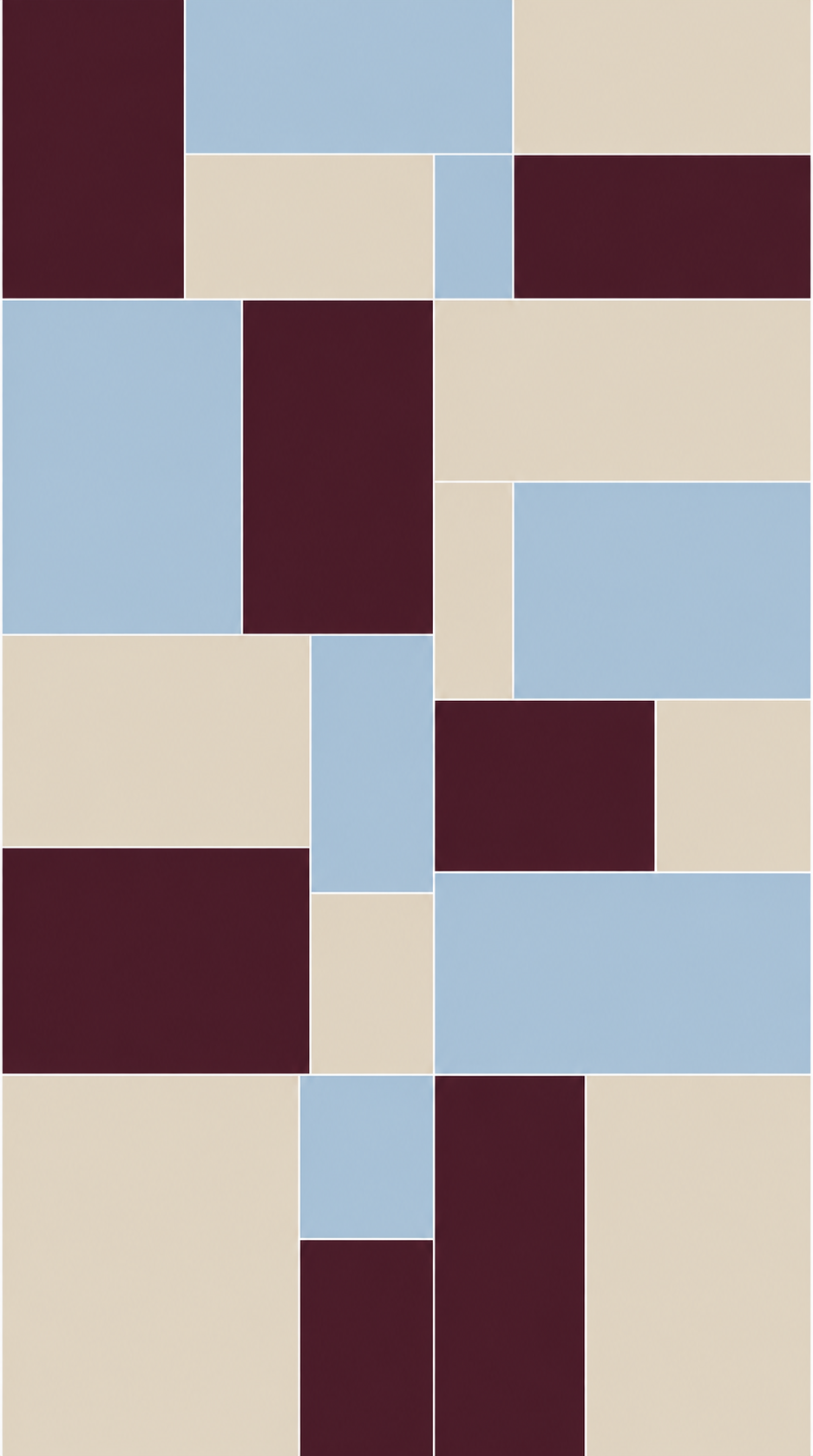
A tessera is one tile. Alone, a colour. In place, part of a picture. The pattern only emerges through the relationships between them.
We may not need another protocol. We often just need a clearer view of the life we already have.